
Key takeaways
- Some tests have to be run in the field: dissolved CO₂, H₂S, pH and alkalinity change once a sample leaves the line.
- Use Sulfinert-treated bottles for sulfur species and constant pressure piston cylinders for NGL.
- Coupons turn guesswork into a measured corrosion rate, if they are handled and logged correctly.
Internal corrosion is driven by what is inside the pipe: water, CO₂, H₂S, oxygen, solids and bacteria. Laboratory analysis can identify all of them, but only if the sample that reaches the bench still represents what was in the line.
Test in the field what will not survive the trip
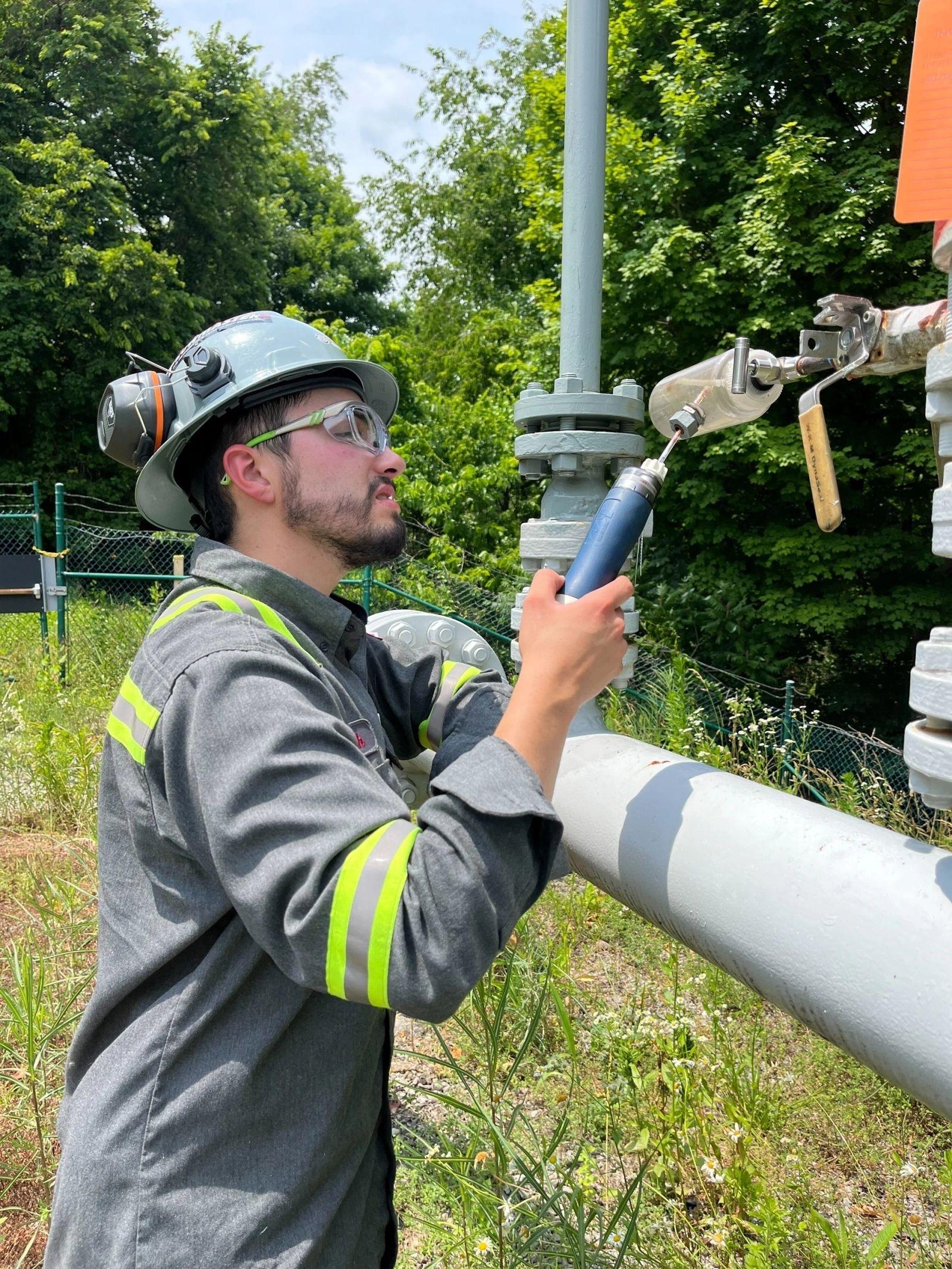
Dissolved gases escape, pH drifts and sulfides oxidize within minutes of sampling. These measurements belong at the sample point:
- Temperature and pH
- Presence of water
- Total alkalinity
- Dissolved CO₂ and dissolved H₂S
- Dissolved sulfide and manganese
- Bacteria vial inoculation, before bacteria die or multiply
Choose the right container
| Sample | Container | Why |
|---|---|---|
| Natural gas | 300cc or 500cc Sulfinert bottles | Treated surfaces stop H₂S and sulfur compounds from adsorbing to the steel. |
| NGL | Constant pressure piston cylinders | Keep the sample single phase so light ends do not flash off. |
| Liquids | Clean HDPE bottles, preserved as required | Prevents contamination and slows chemical change. |
| Quick screening | Field stain tubes | Immediate CO₂, H₂S and water vapor readings on site. |
Corrosion coupons: the measured answer
A coupon is a weighed piece of metal exposed in the line for a known period. After removal it is cleaned and weighed again to calculate a corrosion rate, and examined for pitting and the type of attack. Match the alloy to your pipe (for example 1018 or 1010 carbon steel, or 5LX42) and keep handling, exposure dates and orientation logged, or the rate will not hold up.
From sample to trend
One result is a snapshot. The value is in trending results over time. RCS clients get their own data drive on the RCS server with real-time web access, and the lab can add new results to existing trending databases, at no additional charge for server access.
Related service
Internal Corrosion
Field sampling, on-site fluid testing, gas and NGL collection and corrosion coupons.