
Key takeaways
- For gas pipelines, 49 CFR 192.465 calls for rectifier checks six times a year, no more than 2-1/2 months apart.
- Log output voltage and current every time, and compare against the last reading.
- Most outages trace back to fuses, diodes, lightning, power supply or a broken header cable.
The rectifier is the heart of an impressed current system. When it stops, protection stops, often without anyone noticing until the next survey. A disciplined inspection routine is the cheapest insurance an operator has.
How often
For gas transmission and distribution lines, federal rules (49 CFR 192.465) require each rectifier to be inspected six times each calendar year, at intervals not exceeding 2-1/2 months. Many operators add remote monitoring units so they see a failure the day it happens rather than weeks later.
The field checklist
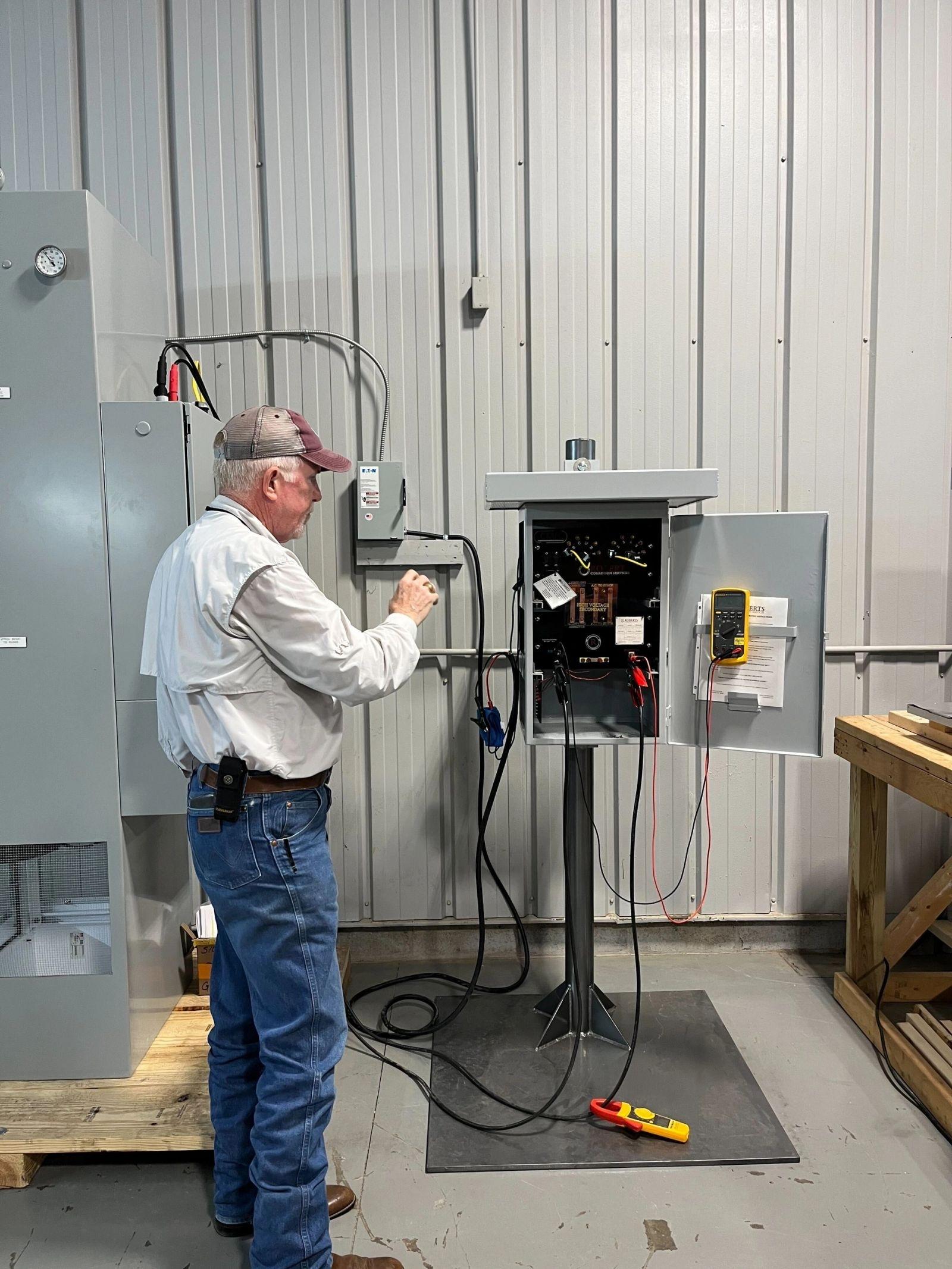
- 01Approach safely: check the cabinet for voltage to ground before touching it, and look for wasps, rodents and water.
- 02Record the tap settings and compare them to the last visit.
- 03Read output DC voltage and current on the panel meters, then verify with a calibrated meter or shunt.
- 04Calculate circuit resistance (volts divided by amps) and compare to history. A big rise often means a cable or anode problem.
- 05Check fuses, breakers, surge arrestors and lightning protection.
- 06Inspect terminals and connections for heat marks, looseness and corrosion.
- 07Note the AC input and the hour meter or efficiency, if equipped.
- 08Photograph the panel and log everything against the unit's GPS position.
Reading the numbers
| Symptom | Likely cause |
|---|---|
| Zero output, AC present | Blown fuse, tripped breaker, failed diode or stack |
| Voltage normal, current near zero | Open circuit: broken header or anode cable, failed anodes |
| Current up, voltage down | Short to a foreign structure or a new contact |
| Output reduced on one phase or half wave | Failed diode or one leg of the stack |
| Steadily rising resistance over months | Anode bed depletion, gas blocking or drying soil |
Train the people who open the cabinet
Different manufacturers lay out their units differently, and that confuses new and experienced techs alike. RCS runs a 1-1/2 day rectifier maintenance and troubleshooting class, with a hands-on second day, covering corrosion and electrical fundamentals, proper equipment and safety. Training certificates with PDH are provided.
Related service
Rectifier Manufacturing
Roberts rectifiers and junction boxes, built to order in the USA.